

If you live in a Southern California hillside or canyon community, wildfire safety starts with more than good luck — it starts with smart landscaping and brush management.
In cities like La Habra Heights, creating a 100-foot defensible space isn’t optional — it’s the law, backed by the City’s 2024 Fire Brochure standards.
🔹 Note: While many of our examples reference La Habra Heights, the principles of brush clearance apply across Southern California’s wildfire-prone zones — including Malibu, Altadena, Pacific Palisades, Santa Monica Mountains, and hillside communities throughout Orange, Los Angeles, Riverside, and Ventura Counties.
We focus on La Habra Heights for a reason:
LHH is a wildfire-resilient city with an excellent reputation for proactive fire safety.
- The La Habra Heights Fire Department (LHHFD) is highly regarded and is a hands-on training ground for fire science students from Rio Hondo College, many of whom go on to become firefighters throughout OC and LA Counties.
- LHHFD’s experience, training, and brush clearance enforcement are respected across the region, making their 2024 standards an ideal model for best practices.
So whether you live in La Habra Heights or anywhere across Southern California’s hills and canyons, following these strategies will help you stay safer, compliant, and wildfire-ready.
🔥 Step-by-Step: Creating Proper Defensible Space
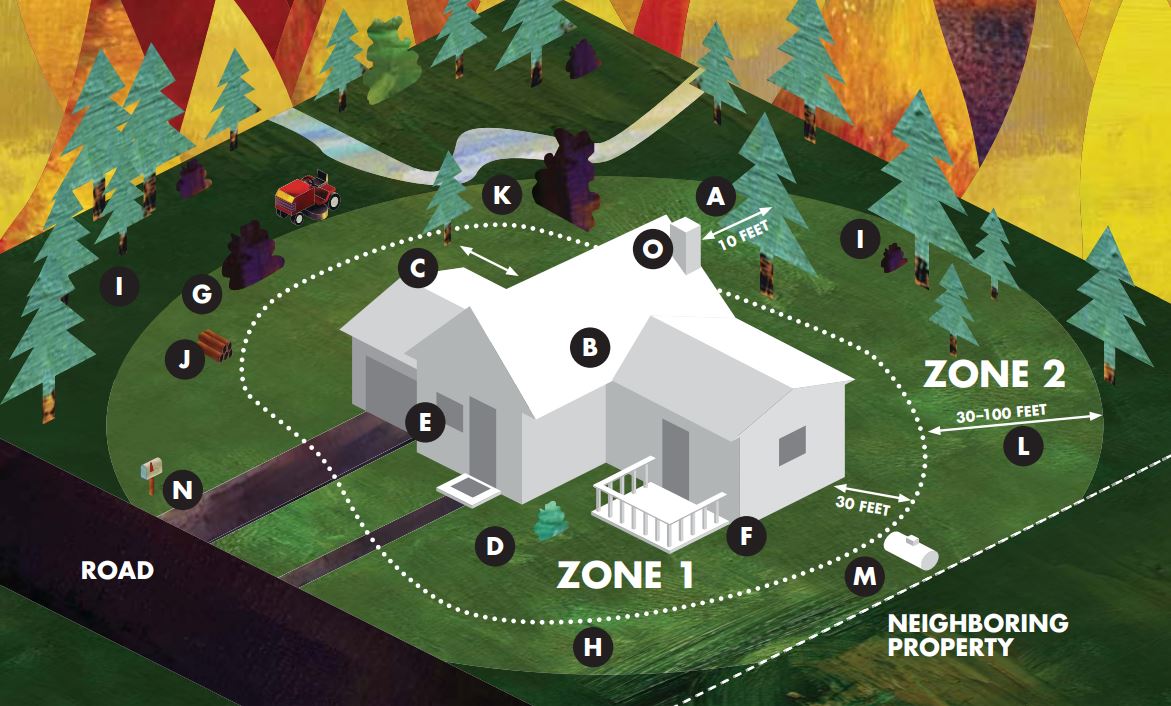
🏡 Zone A: 0–30 Feet From Structures (Highly Modified Zone)
This is your first and most important defense.
You must:
- Remove all dead vegetation (grass, leaves, weeds).
- Trim shrubs below windows and space them properly.
- Eliminate highly flammable plants (like juniper, bamboo, pampas grass).
- Prune trees so no branches touch or hang over structures.
- Clear roofs and gutters of all debris.
This zone should look neat, sparse, and non-continuous — no easy pathways for fire to follow.
👉 Review the top brush clearance rules for homeowners.
🌳 Zone B: 30–100 Feet (or to the Property Line)
This is the thinning zone, where you reduce but don’t fully eliminate natural vegetation.
You must:
- Thin out shrubs and trees to break up fuel continuity.
- Space trees so crowns are 10 feet apart.
- Trim tree branches to maintain at least 6 feet vertical clearance from the ground.
- Remove deadwood and fallen limbs regularly.
Natural vegetation is fine here — but it must be spaced and managed to slow down fire.
✅ Need a step-by-step checklist? See the full brush clearance checklist.
🚪 Driveways and Access Points Matter Too
- Clear 10 feet horizontally on each side of private roads and driveways.
- Maintain 15 feet of vertical clearance for emergency vehicle access.
- Install 4-inch reflective address numbers that are visible from the street.
Fire crews can’t defend homes they can’t reach.
📋 Bonus Tip: Use Hardscape Near Structures
Consider installing:
- Gravel walkways
- Decorative stone patios
- Cement pads
- Retaining walls
These non-flammable barriers can dramatically slow or stop a fire from reaching your home.
✅ Learn the best times of year to start your brush clearance here.
🌟 Final Thought
Creating a defensible space isn’t just about checking a box for compliance.
It’s about giving firefighters a chance, giving your family more time, and giving yourself peace of mind.
With just a few weekends of preparation, you can transform your property into a wildfire-resilient stronghold.
✅ Visit our Brush Clearance Resource Center for more guides and expert help.
✅ Need trusted brush clearance crews? Contact us today.

Leave a Reply