

Clay Soil Series | OC Handyman Services
When preparing your backyard for sod, plants, or a concrete base, you’ve probably heard mixed advice about landscape fabric:
“Do I really need it?”
“Will it help with drainage?”
“Is it just for weeds?”
The truth is, landscape fabric can be a valuable tool — if used correctly. But in many cases, it’s overused or misunderstood. In this article, we’ll walk through when to use it, how to layer it properly, and when skipping it entirely might be the better option.
Let’s break it down clearly.
🧾 What Is Landscape Fabric, Really?
Landscape fabric is a geotextile membrane made of woven or non-woven materials. It’s designed to:
- Separate soil layers
- Improve drainage
- Suppress weeds
- Allow water to pass through while preventing soil migration
It’s not just for flower beds. When used right, it creates long-lasting structure beneath turf, gravel, or even road base.
✅ When Landscape Fabric Is a Good Idea
1. Under Gravel or Road Base (Over Clay Soil)
In Southern California, our clay soils swell and contract. This can cause gravel, road base, or sand to sink into the native soil over time.
A sheet of landscape fabric:
- Prevents intermixing of layers
- Helps maintain grade and slope
- Keeps the gravel or base material from disappearing into the clay
This is critical for:
- RV paths
- Driveways
- Walkways
- Areas where drainage matters
2. Under Turf with High Foot Traffic
If you’re laying artificial turf or sod where people walk frequently (e.g., pet zones, paths, play areas), fabric prevents the base material from getting pushed into the soil below.
You’ll often see this setup:
- Clay soil is tilled or removed
- Fabric is laid flat
- 2–4 inches of road base is compacted on top
- Topsoil (for sod) or sand infill (for turf) is added
This creates a stable, permeable, long-lasting surface.
🚫 When to Skip Landscape Fabric
1. In Garden Beds or Root Zones
Fabric and roots don’t mix. If you’re planting vegetables, shrubs, or trees, you want water, air, and roots to move freely through the soil layers.
Fabric:
- Blocks root growth
- Traps heat and moisture
- Can cause root rot if not monitored
If your project includes plants, use compost and mulch, not fabric.
2. Under Concrete Slabs
Concrete needs a compacted base — usually road base or sand — not fabric. Putting landscape fabric under a slab can create air pockets and uneven settling.
📍 Real Example: Our La Habra Heights Clay Soil Project
At the OC Handyman Services HQ, we prepped a backyard for both sod and RV access. In the sod area, we:
- Removed 8″ of clay
- Added 4″ of compacted road base
- Installed landscape fabric to separate from clay
- Topped with 2–3″ of blended topsoil
- Planted sod for a soft, usable surface
The fabric made a huge difference — preventing road base from sinking and keeping the grass area stable for occasional vehicle traffic.
🧱 Tips for Installing Landscape Fabric Correctly
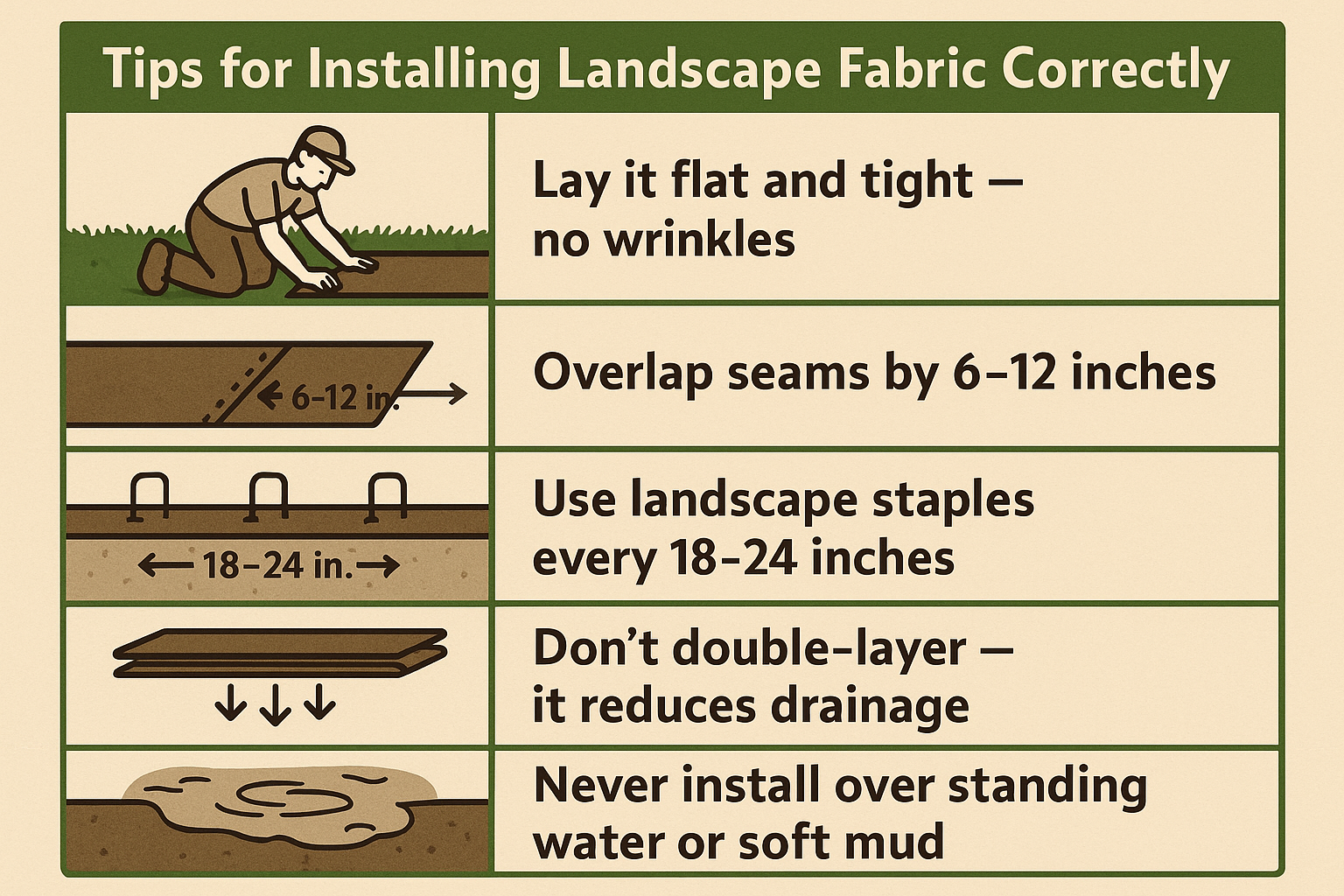
- Lay it flat and tight — no wrinkles
- Overlap seams by 6–12 inches
- Use landscape staples every 18–24 inches
- Don’t double-layer — it reduces drainage
- Never install over standing water or soft mud
Choose a professional-grade woven fabric for longevity (5–10 years under proper conditions).
Leave a Reply