
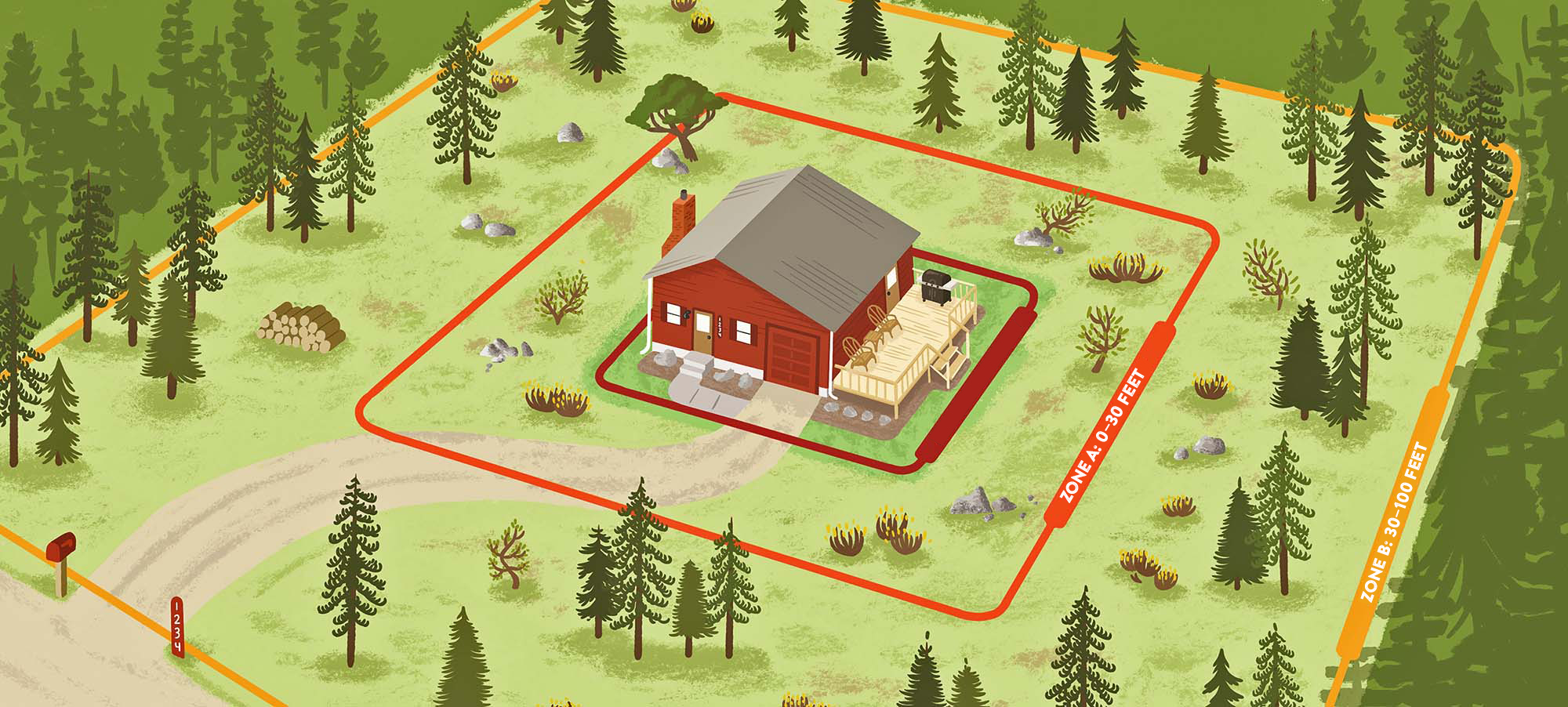

If you live in wildfire-prone areas like La Habra Heights, Malibu, or Altadena, you’ve probably heard the term defensible space.
But did you know it’s divided into two zones, each with different clearance rules?
Here’s a simple guide to Zone A and Zone B — and how managing both could save your home during a wildfire.
🔹 Note: While many of our examples reference La Habra Heights, the principles of brush clearance apply across Southern California’s wildfire-prone zones — including Malibu, Altadena, Pacific Palisades, Santa Monica Mountains, and hillside communities throughout Orange, Los Angeles, Riverside, and Ventura Counties.
We focus on La Habra Heights for a reason:
LHH is a wildfire-resilient city with an excellent reputation for proactive fire safety.
- The La Habra Heights Fire Department (LHHFD) is highly regarded and is a hands-on training ground for fire science students from Rio Hondo College, many of whom go on to become firefighters throughout OC and LA Counties.
- LHHFD’s experience, training, and brush clearance enforcement are respected across the region, making their 2024 standards an ideal model for best practices.
🛡️ What Is Defensible Space?
Defensible space is the carefully maintained area between a building and the wildland area around it.
Its purpose is twofold:
- To reduce fire intensity before it reaches structures.
- To give firefighters a safe place to defend the property.
Creating defensible space is legally required in cities like La Habra Heights — and smart in every hillside or canyon community.
✅ Use our full Brush Clearance Checklist to start building yours.
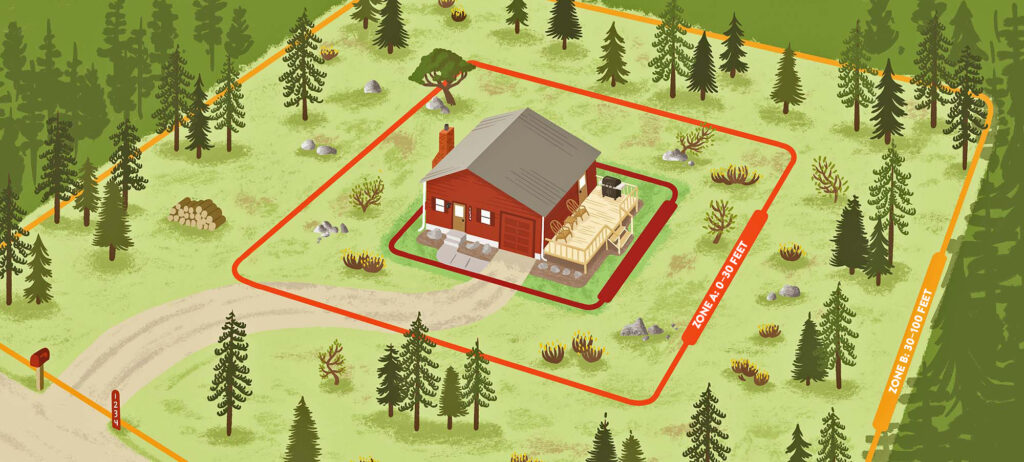
📏 Zone A: 0–30 Feet from Structures (Highly Modified Zone)
This is your first and most important defense line.
✅ Requirements:
- Remove all dead vegetation.
- Remove or thin flammable plants (juniper, bamboo, pampas grass).
- Prune tree limbs so they are at least 6–10 feet off the ground.
- Ensure no tree branches overhang roofs, chimneys, or decks.
- Maintain non-combustible ground cover near structures (gravel, stone, hardscape preferred).
Zone A should be as fireproof as reasonably possible.
✅ Avoid these common mistakes when clearing your immediate zone.
🌳 Zone B: 30–100 Feet from Structures (Reduced Fuel Zone)
This zone focuses on fuel reduction rather than total removal.
✅ Requirements:
- Thin vegetation so there’s horizontal spacing between plants.
- Trim trees so there’s at least 10 feet between canopies.
- Remove ladder fuels that let fire climb from ground to treetops.
- Create breaks between vegetation groupings to slow fire spread.
Zone B slows the fire down — buying time for firefighters and protecting your home.
✅ Learn how to recognize and remove dangerous ladder fuels here.
🛑 Why Defensible Space Zones Matter
- No defensible space = no safe firefighting zone.
- No defensible space = higher insurance premiums (or cancellations).
- No defensible space = greatly increased risk of home loss.
Studies show that homes with strong Zone A and Zone B management are up to 5x more likely to survive a wildfire.
✅ Discover how brush clearance can help lower your homeowners insurance rates.
📋 Tips for Managing Both Zones
- Inspect your property horizontally and vertically for fuel connections.
- Plan major clearance between January and April to meet city deadlines.
- Maintain your zones year-round, especially after winds, rain, or heat waves.
✅ See why timing matters — best months for brush clearance.
🌟 Final Thought
Creating a safe home in wildfire country isn’t about luck —
it’s about planning, maintaining, and understanding your defensible zones.
By managing both Zone A and Zone B, you give your home — and your family — the best possible chance.
✅ Visit our full Brush Clearance Resource Center for tools, diagrams, and trusted clearance help.
✅ Need assistance building your defensible space? Contact us today.
Leave a Reply