
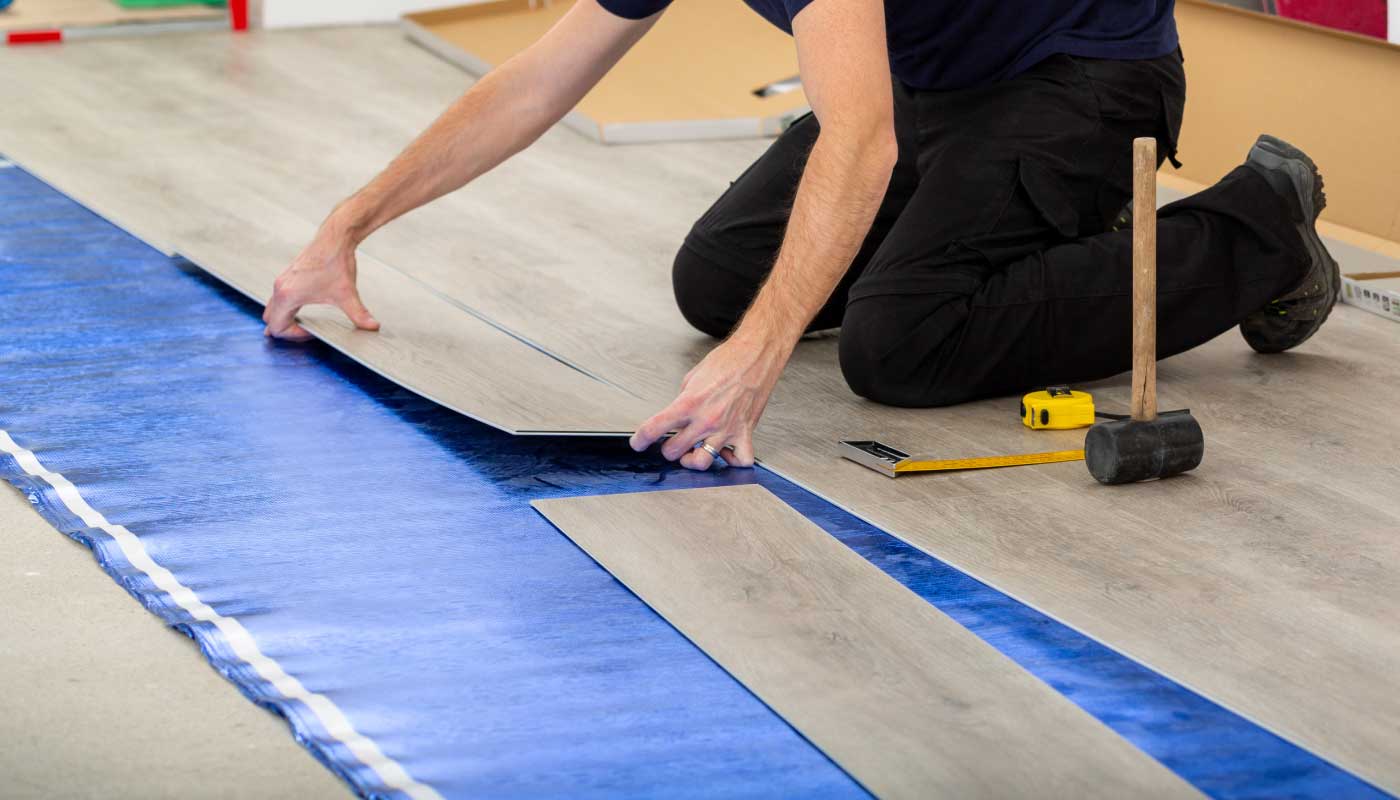

If your floor feels uneven or slopes noticeably — and your flooring contractor tells you not to worry because they’ll “just use underlayment” — it’s time to ask more questions.
At Orange County Handyman Services, we’ve repaired more than a few flooring jobs gone wrong because the installer relied too heavily on underlayment foam, pads, or floating systems to mask real floor problems. And while underlayment plays an important role in comfort and sound, it’s not a substitute for proper floor leveling.
Here’s what your flooring guy probably won’t tell you — but you deserve to know.
🪵 What Is Underlayment Actually For?
Underlayment is a thin layer (often foam or felt) installed between the subfloor and finished flooring. It’s designed to:
- Reduce sound transfer
- Soften the feel underfoot
- Serve as a vapor barrier (in some cases)
- Minimize wear on click-lock flooring systems
What it does not do:
- Flatten a sloped floor
- Stop bounce or sag
- Correct framing issues
- Prevent click separation in floating floors
🚫 The Real-World Risk
We’ve seen multiple projects across Orange County, Whittier, and the IE where:
- LVP flooring started separating within 3 months
- Bouncy sections caused by uncorrected joist sag
- Tile cracking due to dip-filled “quick fixes”
- Clients had to pay twice — once for install, once for repair
In one home in Anaheim Hills, we were called in to assess “soft spots” under a brand-new LVP floor. Turns out the installer layered multiple underlayments in an attempt to hide a 5/8″ dip — and the floor failed in under 6 months.
🛠️ What Should Happen Instead?
Professional floor prep starts with a proper evaluation of the subfloor and framing. That may include:
- Laser-leveling the space to identify dips and high points
- Shimming low joists
- Sistering or reinforcing sagging framing
- Using 1-1/8″ subfloor for stiffness
- Smoothing with self-leveling compound for micro-corrections
Underlayment comes after these steps — not instead of them.
🎓 What You Can Ask Your Flooring Installer
- “How much slope is acceptable for this flooring?”
- “Will you be laser leveling before the install?”
- “What’s your plan if the subfloor isn’t flat?”
- “Can you put your plan in writing before I sign the contract?”
If the answers are vague, dismissive, or overly confident — proceed with caution.
📚 Related Articles You’ll Want to Read:
- 👉 0206 – How to Use a Laser Level to Check Floor Slope
- 👉 0207 – Subfloor Upgrades: Why We Use 1-1/8″ Sheathing
- 👉 0209 – Should You Level the Floor Before Installing New Flooring?
- 👉 0211 – Why Second Story Floors Can Feel Crooked — Even in Newer Homes
🧰 OC Handyman Services = Pro-Level Floor Prep
We support homeowners throughout Orange County, Los Angeles County, and the Inland Empire who want flooring done right — the first time.
Before you pay $10,000+ for hardwood or LVP, let us help you assess your subfloor and framing. A small investment in proper leveling can protect your finish floor investment for decades.
Leave a Reply